Aluminium profiles cut to the millimeter
Aluminium structural profiles, cut to your exact length - compatible with Bosch and item. Best-market price.
- Cut to ±0.5 mm
- Upload BOM
- Live prices and stock
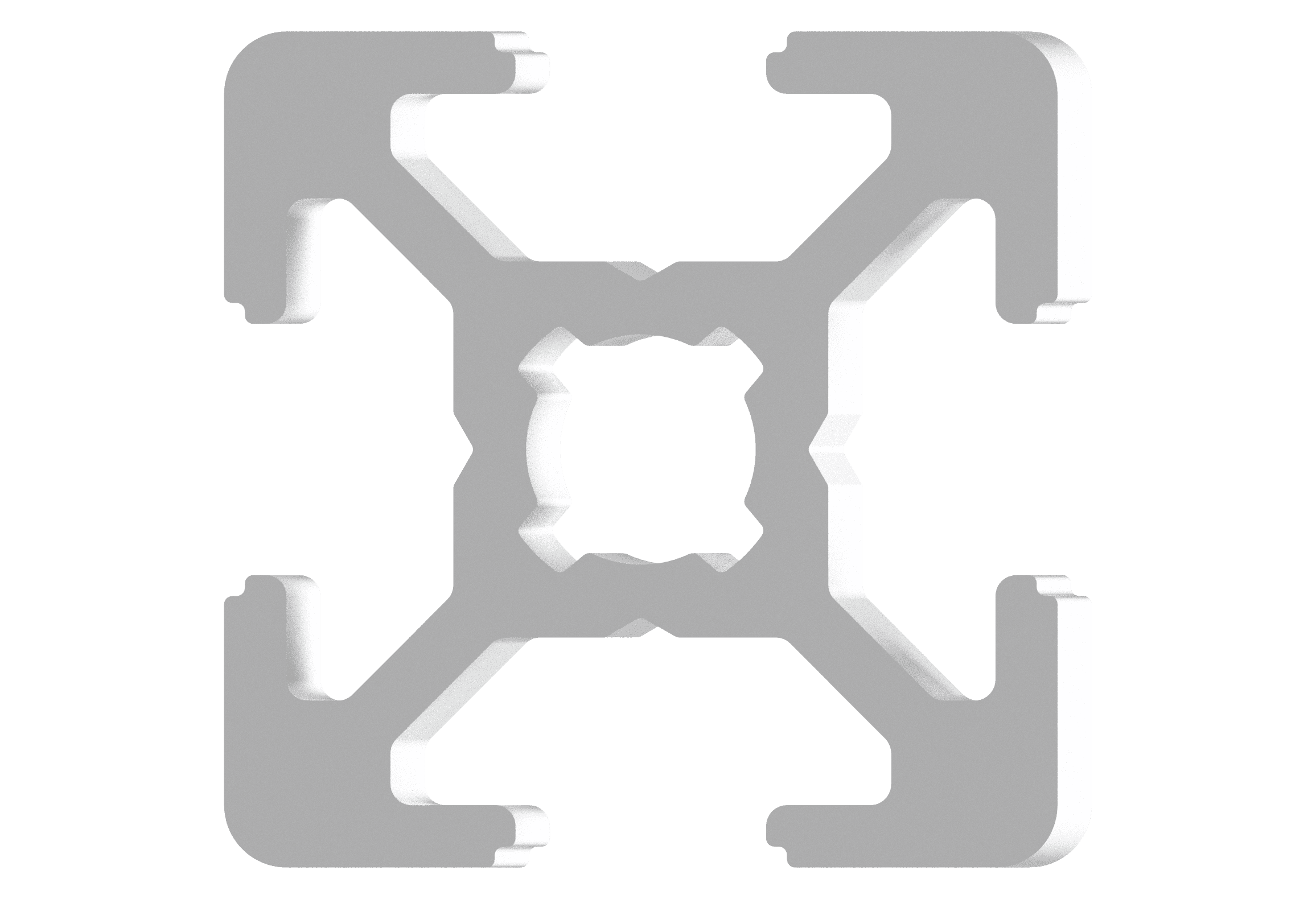
Aluminium profiles silver anodized
from 0.89€ / 100mm
From stock
Standard profiles ready to ship immediately
CAD data & BOM
STEP/DXF for every profile
Volume discount
Automatic rebate in the cart
RBTXpert
Free design support via video call
Two ways to your goal
How to order your profiles
Configure your profile step by step or upload a bill of materials directly - both lead quickly to a quote.
Aluminium Configurator
List in – quote out.
Already have a list? Just drag your Word, PDF or Excel file into the field. Our AI app reviews it and adds the right products. We get back to you with a fixed-price quote.
- 1
Drop your file
Bill of materials, drawing or sketch - several files welcome.
- 2
Our AI app checks & calculates
Profiles, cutting, machining and accessories are matched up.
- 3
Fixed-price quote
Incl. delivery time - usually within one working day.
Drag files here
or select from your computer
You sketch it – we build it.
You don't need to be a CAD pro. A hand sketch is enough. Send us your idea - as a photo from your notepad, a drawing or a CAD file.
We cut the profiles to size, screw them together with the right accessories exactly the way you need them, and ship the fully assembled frame to your door. Unpack, install, done.
Send a sketch
Photo, drawing or CAD
We assemble
Cutting + screwing
Delivered ready
assembled & ready to use
Roughly like this!
Aluminium Extrusions and T-Slot Profiles Cut to Size
Configure aluminium extrusions for machine frames, automation systems, robot cells, workstations, safety enclosures and other industrial structures. Select the required profile, enter your custom length and add suitable connectors or accessories for your application.
The RBTX aluminium profile configurator helps you plan individual profiles or complete framing projects. You can configure profiles online or upload an existing bill of materials, drawing or CAD file to request a complete quotation.
Configure T-Slot Aluminium Extrusions Online
T-slot aluminium extrusions provide a modular foundation for industrial machines, automation equipment and custom framing systems. The integrated slots make it possible to attach brackets, joining plates, panels, sensors, cable guides and other components without welding the complete structure.
Instead of ordering long stock lengths and cutting every profile in-house, you can specify the required dimensions directly. This makes the configurator suitable for individual prototypes, one-off machine frames, recurring production equipment and larger profile requirements.
Both American and international terminology are commonly used for these products. Depending on the market, they may be described as aluminium extrusions, aluminium extrusions, aluminium profiles, aluminium profiles, T-slot profiles or machine building profiles. In each case, the basic principle is the same: an extruded profile with defined dimensions and slots that can be combined with compatible connection technology.
What Are Aluminium Extrusion Profiles?
Aluminium extrusion profiles are manufactured by pressing aluminium through a shaped die. The resulting profile has a consistent cross section along its length. Industrial profiles often include one or more T-slots that can be used to install fasteners, connectors and accessories.
Compared with welded steel frames, a modular aluminium framing system is easier to modify, expand or rebuild. Components can be repositioned, profiles can be replaced and additional equipment can be attached at a later stage. This is particularly useful in machine building and factory automation, where layouts and production requirements may change over time.
Typical Applications for Aluminium Framing Systems
An aluminium framing system can be used for lightweight fixtures as well as complex industrial structures. The correct profile size depends on the required rigidity, span, load, dynamic forces and attachment points.
| Application | Typical framing requirement | Important selection criteria |
|---|---|---|
| Machine frames | Rigid structural profiles for equipment and assemblies | Profile cross section, load, deflection and connection method |
| Robot cell frames | Modular profiles for enclosures, doors and equipment mounting | Cell dimensions, guarding, access and component compatibility |
| Automation systems | Flexible profiles for sensors, actuators and production modules | Mounting positions, cable routing and future expansion |
| Industrial workstations | Configurable frames for tools, shelves and material supply | Ergonomics, working height and accessory integration |
| Conveyor frames | Linear structural profiles with adjustable attachment points | Conveyor width, load, supports and alignment |
| Protective enclosures | Profiles for panels, doors and safety guarding | Panel thickness, hinges, handles and safety requirements |
| Assembly stations | Modular framing for production and lean manufacturing | Accessibility, layout and material flow |
T-Slot Aluminium Profiles for Machine Building
T-slot aluminium profiles are especially useful in machine building because they combine structural stability with flexible mounting options. Standardized slots allow compatible components to be fixed at different positions along the profile.
A machine frame can therefore be adapted without redesigning the complete structure. Sensor brackets, guarding elements, control panels, cameras, lighting, linear axes or cable management components can be moved or added as the application develops.
Typical machine building projects include:
- equipment bases and machine support frames
- robot and cobot work cells
- inspection and testing stations
- pick-and-place automation frames
- vision system and camera supports
- conveyor and material handling structures
- assembly tables and ergonomic workstations
- safety enclosures and protective guarding
Custom Aluminium Extrusions Cut to Length
For many projects, standard stock lengths create unnecessary work. Cut-to-size aluminium extrusions can reduce in-house cutting, material waste and preparation time. You enter the required profile length and quantity, allowing each item to be prepared for the planned construction.
Custom lengths are particularly helpful when a frame contains many different parts. Instead of manually transferring every dimension to a saw list, the complete requirement can be organized as a structured bill of materials.
Depending on the profile and project, additional machining may also be required. This can include threaded holes, bore holes or other profile preparation. The required machining should be defined together with the position, orientation and intended connection.
Upload a Bill of Materials, Drawing or CAD File
When a project includes several profiles, the fastest route is often to upload an existing bill of materials. A structured list helps identify the required profile type, length, quantity, machining and accessories.
You can also submit a drawing, sketch, PDF or CAD file. This is useful when the complete structure already exists in a design file or when the profile requirements cannot be described through individual dimensions alone.
A useful profile list should contain:
- profile type and cross section
- required length
- quantity per profile
- slot size and profile system
- required holes, threads or machining
- connectors, brackets and fasteners
- notes about load, installation and application
Slot Sizes: Slot 5, Slot 6, Slot 8 and Slot 10
The slot size is one of the most important technical characteristics of a T-slot extrusion. Common search terms include Slot 5, Slot 6, Slot 8 and Slot 10. The slot determines which fasteners, T-nuts, connectors and accessories can be installed.
A larger profile does not automatically mean that every accessory will fit. Connection technology must match the specific slot geometry and profile system. Before combining profiles with existing components, check the slot size, system type and required fastener dimensions.
| Selection factor | Why it matters |
|---|---|
| Slot size | Determines compatible T-nuts, fasteners and accessories |
| Profile dimensions | Influence rigidity, weight and available mounting area |
| Profile cross section | Affects structural performance and resistance to deflection |
| Profile weight | Influences handling, moving mass and overall structure weight |
| Surface finish | Impacts appearance, corrosion resistance and application suitability |
| Connection method | Determines assembly effort, rigidity and accessibility |
Choosing the Right Aluminium Profile Dimensions
The correct profile should be selected according to the application rather than appearance alone. A compact extrusion may be sufficient for a sensor mount or lightweight fixture. A machine base, robot frame or long unsupported span normally requires a larger structural profile.
Consider the following questions before selecting a profile:
- What load must the frame carry?
- Is the load static or dynamic?
- How long are the unsupported spans?
- Will a robot, linear axis or moving assembly be installed?
- Does the frame require panels, doors or protective guarding?
- Will additional equipment be installed later?
- Which slot size and connection technology are already in use?
For dynamic automation applications, rigidity and vibration behavior are especially important. A frame that is sufficient for a static workstation may not be appropriate for a robot, conveyor or rapidly moving axis.
Aluminium Extrusion Connectors and Accessories
A profile alone does not create a complete framing system. The structure also requires compatible aluminium extrusion connectors, fasteners and accessories. These parts define how profiles are joined and how additional components are attached.
Common framing components include:
- T-slot connectors and internal connectors
- corner brackets and angle brackets
- joining plates
- T-nuts and threaded fasteners
- end caps and profile covers
- slot covers
- leveling feet
- caster wheels
- hinges and handles
- panel elements
- door and guarding components
The appropriate connection method depends on the required rigidity, appearance, accessibility and assembly time. External corner brackets are easy to install and adjust, while concealed connectors may provide a cleaner appearance. Joining plates can help distribute loads across a larger area.
Aluminium Framing for Robotics and Automation
Robotics frames and automation structures often need to support several systems at the same time. The mechanical frame may carry the robot, controller, sensors, vision equipment, safety components, end-of-arm tooling and material handling equipment.
A modular robotics framing system makes it easier to coordinate these components. Mounting points can be repositioned, guarding can be extended and additional modules can be added without rebuilding the entire installation.
Typical robotics applications include:
- cobot workstations
- robot cell enclosures
- pick-and-place systems
- machine tending cells
- inspection and quality control stations
- camera and vision frames
- mobile or modular automation units
Protective Enclosures and Safety Guarding
Aluminium profiles are frequently used to construct protective enclosures around machines and automated equipment. The T-slots provide attachment points for panels, mesh guarding, doors, hinges, handles and safety components.
The frame layout should consider more than the external dimensions. Access for maintenance, material flow, operator interaction, door position and safety distances must be included during planning. The profile system should also support the intended panel thickness and door weight.
Industrial Workstations and Assembly Stations
Modular aluminium framing is also suitable for industrial workstations and assembly stations. Working height, shelves, lighting, tool holders and material supply can be adapted to the process and the operator.
Because components can be moved along the T-slots, the workstation can be adjusted when production steps or product variants change. This supports flexible manufacturing and lean production environments where layouts are frequently optimized.
Aluminium Extrusions Compared with Aluminium Tubes and Rails
Terms such as aluminium rails, aluminium beams, structural profiles and square tubes are sometimes used interchangeably, although the products serve different purposes.
| Product type | Typical use | Main advantage | Limitation |
|---|---|---|---|
| T-slot aluminium extrusion | Machine frames, automation and modular structures | Flexible attachment and easy modification | Accessories must match the profile system |
| Square or rectangular aluminium tube | Simple frames and general fabrication | Closed and clean cross section | Fewer options for adjustable attachments |
| Aluminium rail | Guides, mounting tracks and linear support | Suitable for linear mounting applications | Not always designed as a primary frame structure |
| Flat or angle profile | Brackets, edges and simple supports | Simple geometry and low weight | Limited modularity compared with T-slot systems |
Anodized and Black Aluminium Profiles
Industrial extrusion profiles are often supplied with an anodized surface. Anodizing improves the surface finish and helps protect the aluminium. Clear anodized profiles are widely used for machine frames and workstations because of their neutral industrial appearance.
Black aluminium profiles may be selected when the visual appearance of the frame is important, for example in exhibition equipment, camera systems, laboratories or customer-facing automation systems. Availability depends on the selected profile type and dimensions.
What Influences the Price of Aluminium Extrusions?
The total cost of an aluminium framing project depends on more than the price per unit length. Profile size, total weight, number of cuts, machining, accessories, quantity and assembly effort all influence the quotation.
| Cost factor | Effect on the project | Planning recommendation |
|---|---|---|
| Profile size | Larger profiles contain more material and generally cost more | Select the profile according to the actual load and rigidity requirement |
| Custom cuts | Many individual lengths increase handling and preparation | Group identical lengths in the bill of materials |
| Machining | Threads, holes and special preparation add manufacturing steps | Specify positions and tolerances clearly |
| Accessories | Connectors, brackets, feet and covers contribute to total cost | Plan the complete assembly rather than profiles alone |
| Assembly | Preassembled frames can reduce installation time | Compare internal assembly effort with a prepared solution |
How to Configure an Aluminium Framing System
- Select the profile: Choose the required profile dimensions, slot size and system.
- Enter the length: Specify the custom profile length and required quantity.
- Add machining: Include holes, threads or other preparation where required.
- Select accessories: Add compatible connectors, brackets, fasteners and finishing components.
- Upload project files: Submit a bill of materials, drawing or CAD file for more complex structures.
- Request a quotation: Send the configured requirement for technical review and pricing.
Common Mistakes When Selecting T-Slot Profiles
One of the most common mistakes is choosing a profile only by its external dimensions. Two profiles with a similar outer size may use different slot geometries, wall thicknesses or connection systems.
Other common issues include:
- using connectors that do not match the slot size
- underestimating dynamic loads or vibration
- selecting a profile that is too small for a long span
- forgetting panels, doors and accessories during planning
- not allowing access for assembly or maintenance
- ordering stock lengths without considering cutting and material waste
FAQ: Aluminium Extrusions and Framing Systems
What is a T-slot aluminium extrusion?
A T-slot aluminium extrusion is an extruded profile with one or more T-shaped slots. The slots accept compatible T-nuts, fasteners and connectors, allowing frames and attachments to be assembled without welding.
What is the difference between aluminium profiles and aluminium extrusions?
Aluminium extrusion describes the manufacturing process as well as the finished product. Aluminium profile is a broader term for an aluminium component with a defined cross section. In industrial framing, both terms are often used for the same T-slot products.
Can aluminium extrusions be cut to a custom length?
Yes. Cut-to-length aluminium extrusions can be configured according to the required dimensions. Custom cutting reduces internal preparation work and can simplify the assembly of complete frames.
Which profile size should I choose?
The correct profile size depends on the load, span, required rigidity, attachment points and application. Lightweight fixtures may use smaller profiles, while machine bases and robot frames normally require larger structural sections.
What do Slot 5, Slot 6, Slot 8 and Slot 10 mean?
These terms describe the nominal slot size of the profile system. The slot size determines which T-nuts, fasteners and accessories are compatible with the profile.
Can I upload a complete bill of materials?
Yes. A bill of materials, drawing, sketch or CAD file can be used to define a project with several profiles, custom lengths, machining requirements and accessories.
Are aluminium extrusion systems suitable for robot cells?
Yes. Aluminium framing systems are commonly used for robot cell frames, guarding, equipment supports and modular automation structures. The profile must be selected according to the cell dimensions, installed components and structural requirements.
Which accessories are required for an aluminium frame?
The required accessories depend on the design. Typical components include corner brackets, internal connectors, joining plates, T-nuts, fasteners, end caps, leveling feet, caster wheels, hinges, handles and panel elements.
Can the frame be modified later?
Yes. One of the main advantages of modular T-slot framing is that components can be moved, added or replaced. This makes the system suitable for equipment that may need to be adapted in the future.
Are CAD files available for the profiles?
CAD data may be available for selected profiles and components. This allows the extrusion and accessories to be integrated into the machine or frame design before ordering.
Configure Aluminium Extrusions for Your Project
Use the RBTX configurator to select aluminium extrusion profiles, define custom lengths and plan suitable connection technology. Configure individual profiles online or upload your complete project files to request a quotation for profiles, machining and accessories.
Configure your aluminium framing system, upload a bill of materials or submit your machine frame design for review.